3 Best Blinds for Edmonton Winters (Installer Picks)
Quick Answer
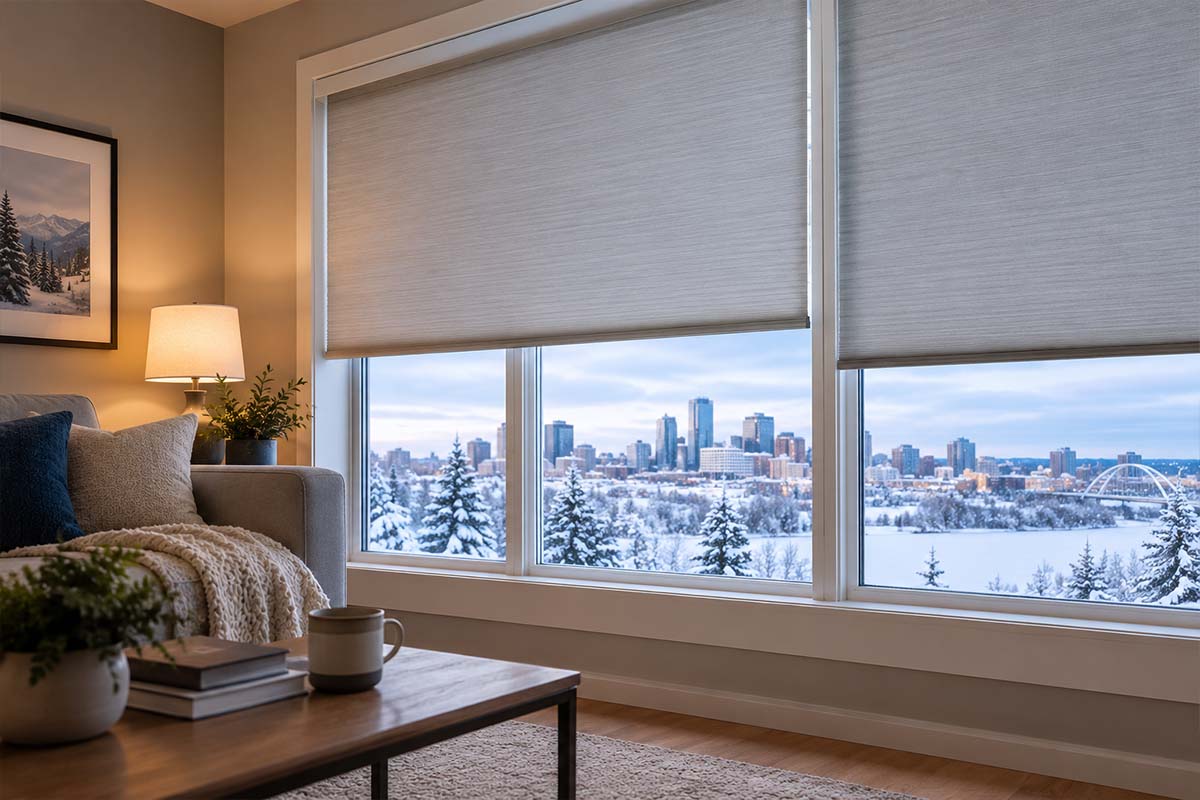
The best blinds for Edmonton winters are honeycomb blinds. Their air-filled cells hold heat at the glass better than any other covering we make. Use Honeycomb DNN blinds in bedrooms, and layer lined drapery over your biggest windows. Here are our three picks:
Honeycomb Blinds
Honeycomb DNN Blinds
Drapery
What Edmonton Winters Do to Your Windows
Edmonton winters are long, dry, and properly cold, with regular cold snaps that drop well below -30°C. When it gets like that, your windows feel it first.
Glass is the coldest surface in most rooms. The air beside it chills and sinks, and you feel it as a draft around the sofa even when the window is sealed. In December, the sun sets before 4:30 p.m., so you spend much of that cold in the dark, with the furnace running hard.
A good covering stops that cold layer at the window. The U.S. Department of Energy reports that tightly fitted cellular shades cut heat loss through a window by 40% or more. That is why the best winter blinds for Edmonton homes are insulating shades first and decorative ones second.
What to Look for in Winter Blinds
Look for four things:
An insulating structure. Air cells or a lined, heavy fabric.
A snug fit. Small gaps at the sides and top let cold air spill into the room.
Easy daily use. A blind left open all night does nothing, so it has to be simple to close by 4 p.m.
Light control. Winter sun is low and bright, and snow doubles the glare.
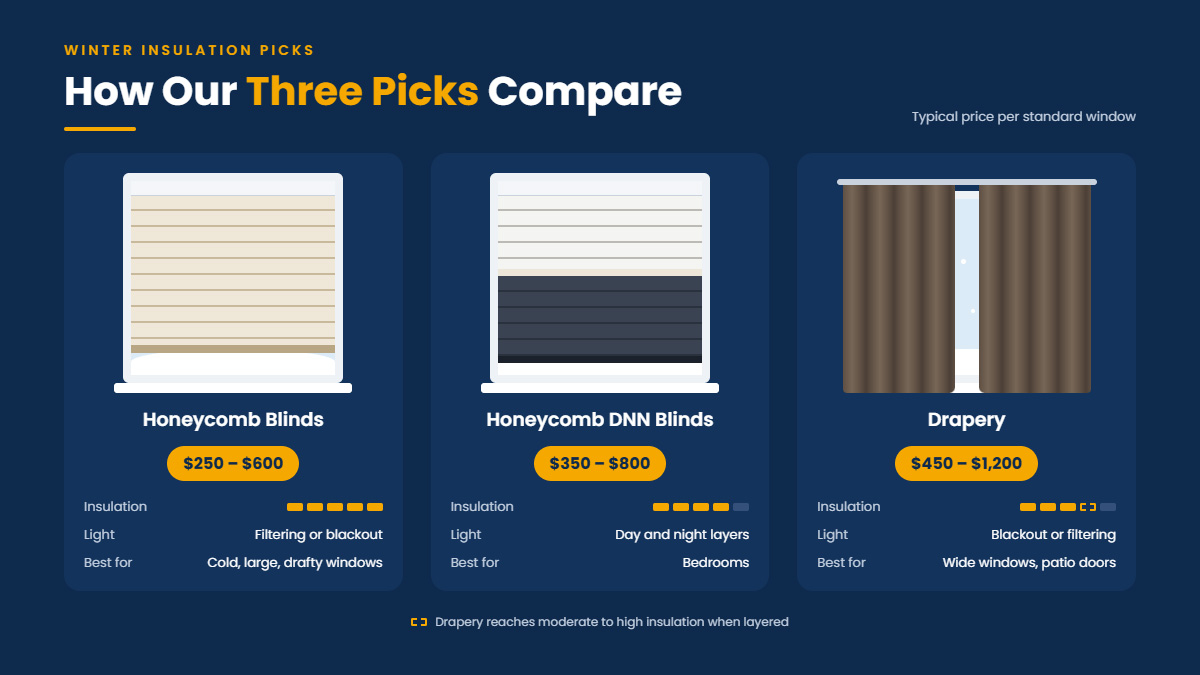
Here is how our three picks compare:
Blind | Winter insulation | Light control | Best for | Typical price per standard window |
|---|---|---|---|---|
Honeycomb Blinds | Highest | Light filtering or blackout | Cold, large, or drafty windows | $250 to $600 |
Honeycomb DNN Blinds | High | Day and night layers | Bedrooms | $350 to $800 |
Drapery | Moderate to high when layered | Blackout or light filtering | Wide windows and patio doors | $450 to $1,200 |
The 3 Best Blinds for Edmonton Winters
Every blind below is custom-made for your window, and our team handles in-home measuring and installation.
1. Honeycomb Blinds: Best Overall for Insulation
If you buy one thing to help your windows through winter, make it honeycomb blinds. Their cellular fabric traps pockets of air between your room and the glass. For anyone shopping for energy-efficient blinds in Edmonton, this is the place to start.
What you get:
Single, double, or triple cell construction, with more cells holding more heat
Light-filtering or blackout fabrics
Cordless and motorized operation, with smart control through Alexa, Google Home, and Apple HomeKit
A quieter room, since the cells also absorb sound
For north-facing rooms and large windows, where the cold hits hardest, our installers fit double cell shades. Single cell is plenty for small windows and spare rooms. If you want the full picture before deciding, read our guide to honeycomb shades pros and cons.
Typical price: $250 to $600 per window. Size, cell type, and blackout fabric set the total.
2. Honeycomb DNN Blinds: Best for Bedrooms
Honeycomb DNN blinds put two fabrics on one headrail: a light-filtering panel for the day and a blackout panel for the night. Each panel moves on its own, so one shade gives you daylight, privacy, or full darkness, with the same insulating cells either way.
In Edmonton bedrooms, the problem is often light, not just cold. Snow on the ground bounces streetlight and early morning sun straight into the room, and a light-filtering shade alone can’t stop it. A DNN blind handles both jobs, so there’s no need to add blackout drapes later.
Typical price: $350 to $800 per window.
3. Drapery: Best for Wide Windows and Patio Doors
Large picture windows and sliding doors lose the most heat, and a single shade often can’t cover them well. Lined drapery adds a full-length fabric layer in pinch pleat, eyelet, or grommet styles.
The Department of Energy recommends hanging drapes close to the window and letting them reach the sill or the floor. That’s how our installers hang every drapery panel, because a drape that sits away from the wall lets cold air spill out underneath it. On your coldest windows, layer drapery over a honeycomb shade.
Typical price: $450 to $1,200 per window, depending on width and fabric weight.
Which One Fits Your Home?
Match the blinds to the room:
Bedrooms: Honeycomb DNN blinds
Living rooms with big windows: honeycomb blinds with drapery layered over them
Patio and sliding doors: drapery on a track
Homes with kids or pets: cordless or motorized versions, which remove loose cords
What Our Installers Recommend in Edmonton Homes
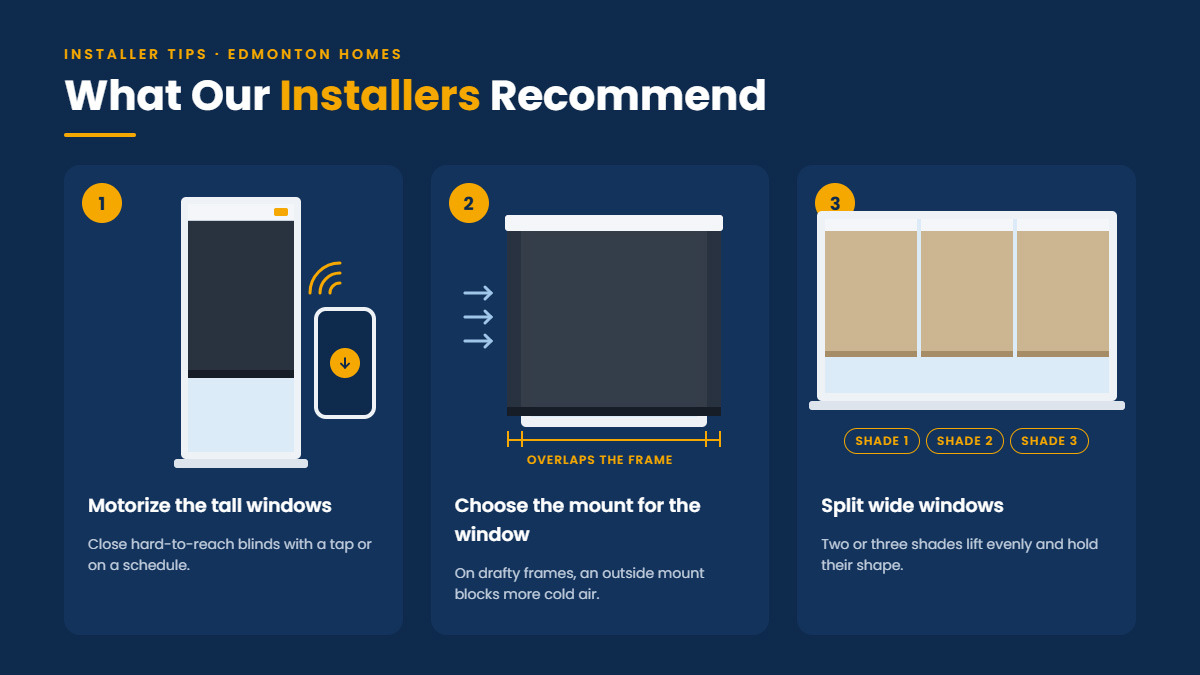
Motorize the tall windows. Blinds that are hard to reach tend to stay open all winter. Motorized blinds close with a tap or on a schedule, so they actually get used.
Choose the mount for the window, not the look. On drafty frames, an outside mount that overlaps the frame by a few centimetres blocks more cold air than an inside mount. We check window depth and frame condition before recommending either.
Use more than one shade on wide windows. On picture windows, two or three shades side by side lift more evenly and hold their shape better than one oversized blind.
Watch for Frost and Condensation
Edmonton’s deep cold creates one problem many homeowners don’t expect. A well-fitted insulating blind keeps warm room air away from the glass, so the glass gets even colder. In very cold weather, that can lead to frost or condensation on the window and frame.
Two simple habits help. Raise your blinds for part of the day so warm air can reach the glass, and keep indoor humidity at a moderate level through the coldest weeks. You keep the insulation benefit at night without the moisture problems.
Make Any Blind Work Harder in the Cold
Good blinds work best with good habits. Open south-facing blinds in the morning to let the low winter sun warm the room, and close them before sunset to hold that heat in. On overcast days and during cold snaps, keep them closed most of the day, but raise them briefly around midday so warm air can reach the glass.
Our smart control system can handle the closing for you, lowering every blind at 3:30 p.m. whether you’re home or not.
Timing matters too. Our zebra, roller, sunscreen, and trifold blinds take about 10 to 12 business days to make after your deposit. Honeycomb and drapery take about 15 to 20 business days. If you want winter blinds in place before January, order now. For year-end deadlines and deals, see our guide to the best time to buy blinds.
Get Your Windows Ready for Winter
We measure and install custom blinds in Edmonton and the surrounding area. Book a free in-home measure and consultation, and our team will measure every window and recommend the right blind for each room.
FAQs (Frequently Asked Questions)
1. What are the best blinds for Edmonton winters?
Honeycomb blinds are the top choice. Their cellular structure traps air against the glass to reduce heat loss, and they come in single, double, and triple cell versions. For bedrooms, choose Honeycomb DNN blinds, and on large windows, layer lined drapery over a honeycomb shade.
2. Do insulating blinds really save energy in Edmonton?
Yes. According to the U.S. Department of Energy, properly fitted cellular shades can reduce heat loss through a window by 40% or more. Your actual savings depend on how you use them: keep them closed at night, open sun-facing blinds during the day, and raise the rest briefly on very cold days to prevent frost on the glass.
3. How much do winter blinds cost in Edmonton?
Custom pricing per standard window runs $250 to $600 for honeycomb blinds, $350 to $800 for Honeycomb DNN blinds, and $450 to $1,200 for drapery. Window size, fabric, cell construction, and motorization affect the price, and installation is included in the quote. For a full breakdown, see how much blinds cost in Canada.
4. Are blinds or curtains better for winter?
Honeycomb blinds insulate better than curtains alone, but the warmest setup uses both. A cellular shade sits close to the glass, while lined drapery adds another layer of protection. Hang drapery over a honeycomb shade on your coldest windows.
5. When should I order winter blinds in Edmonton?
Order in early fall. Our faster styles take about 10 to 12 business days to make, and honeycomb and drapery take about 15 to 20 business days, plus installation. Ordering in October gets your blinds up before the deepest cold arrives.