Drapery vs Curtains: What's the Real Difference?
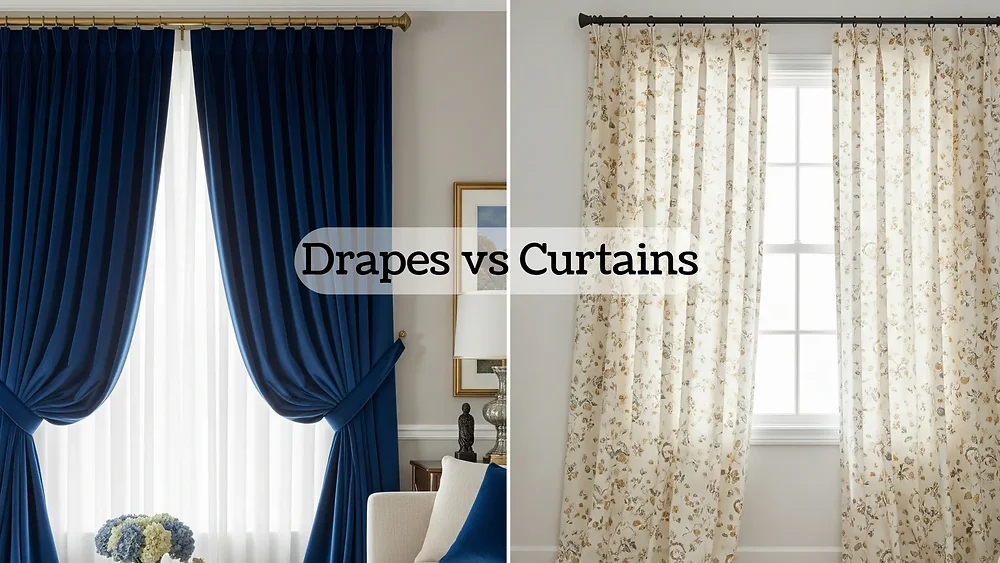
Quick answer: Drapery is heavier, lined, floor-to-ceiling fabric panels made to custom measurements for a formal, tailored look — think hotel lobbies and formal living rooms. Curtains are lighter, usually unlined, often sold ready-made in standard sizes, and suit a more casual, everyday look. The core differences come down to weight, lining, fit, and price.
Homeowners across Calgary ask us this almost every week during consultations, and it's an easy mix-up — both hang from a rod, both cover a window, and retailers use the words interchangeably online. But when you're choosing window treatments for a specific room, the distinction actually changes the outcome: how much light you block, how warm the room stays in a Calgary winter, and how much the finished look costs.
What Is Drapery?
Drapery refers to fabric window panels that are custom-made to the exact dimensions of a window, typically constructed from heavier fabrics like velvet, jacquard, or lined linen. Drapery almost always includes a lining — an extra layer of fabric sewn to the back panel — which adds structure, blocks more light, and improves insulation against cold glass.
Because drapery is made to measure, it hangs floor-to-ceiling with a clean, tailored break at the bottom, similar to a well-fitted suit. This is why interior designers reach for drapery in formal living rooms, dining rooms, and primary bedrooms where the window treatment is meant to anchor the whole room.
What Are Curtains?
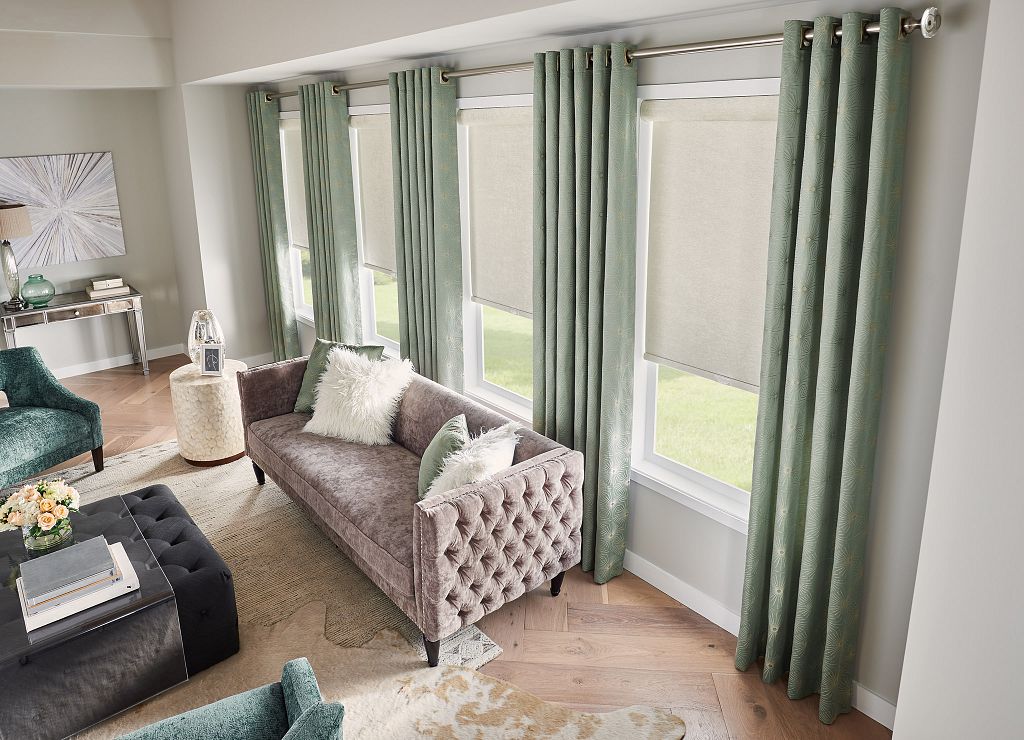
Curtains are lighter fabric panels, usually sold in fixed standard sizes (such as 84" or 96" lengths) rather than custom-measured. Most curtains skip the lining entirely, which lets more natural light filter through and gives the fabric a softer, more relaxed drape.
Curtains work well in casual spaces — kitchens, kids' bedrooms, home offices — where the goal is everyday light control and a quick style refresh rather than a formal statement. They're also the more budget-friendly option, since off-the-shelf sizing skips the custom fabrication cost.
Drapery vs Curtains: Key Differences at a Glance
Feature | Drapery | Curtains |
|---|---|---|
Fabric weight | Heavy (velvet, jacquard, lined linen) | Light to medium |
Lining | Usually lined | Usually unlined |
Sizing | Custom-measured to your window | Standard, ready-made sizes |
Light control | Blocks more light, better blackout | Filters light softly |
Insulation | Better thermal and sound insulation | Minimal insulation |
Look | Formal, tailored | Casual, relaxed |
Price | Higher (custom fabrication) | More affordable |
Best rooms | Living room, dining room, primary bedroom | Kitchen, kids' room, home office |
Which One Is Right for Your Room?
Choose drapery if:
You want a formal, finished look in a living room or dining room
Your windows face a busy street and you want better light and sound blocking
Calgary's winter chill comes through your glass and you want the extra insulation — our guide to the best blind styles for Calgary homes breaks down thermal and blackout options that pair well with drapery
You're working with an oversized or non-standard window that off-the-shelf sizing won't fit properly
Choose curtains if:
You want an easy, budget-friendly update
The room gets heavy daily use and you'd rather not commit to a formal treatment
You like the option to swap styles seasonally without a big investment
Soft, filtered natural light is more important than blackout
Can You Combine Drapery and Curtains?
Yes — and it's one of the most common setups we install. A sheer layer close to the glass filters daylight and adds softness, while a heavier drapery panel behind it handles privacy, insulation, and blackout at night. If you like this layered approach, our sheer curtains pair naturally with a lined drapery panel for exactly this effect.
Many Calgary homeowners also layer drapery over functional custom blinds — the blinds handle precise daily light control, while the fabric panel adds warmth and softens the window frame. If you like the idea of one window covering doing both jobs, it's worth reading how double roller blinds combine light-filtering and blackout fabric on a single headrail, or how zebra blinds borrow the soft drape of curtains with the adjustable control of blinds — both are popular alternatives for homeowners who want fabric-like softness without a full drapery installation.
How Met Blinds Can Help?
Our Calgary design team measures and installs both custom drapery and our ready-made curtain collection for homes across Calgary, Red Deer, Lethbridge, and Edmonton. During a free in-home consultation, we walk through fabric weight, lining options, and hardware so the finished window treatment fits both the room and the budget — not just the window.
If you're still deciding between the two, book a free consultation and we'll bring fabric samples to your home so you can see how each option looks in your actual light.
Frequently Asked Questions
Is drapery more expensive than curtains?
Generally yes. Drapery is custom-measured and typically lined, which adds fabrication and material cost compared to ready-made curtains sold in standard sizes.
Do curtains and drapery serve the same purpose?
Both cover a window and control light and privacy, but drapery is built for insulation, blackout, and a formal look, while curtains are lighter and better suited to everyday, casual use.
Can drapery help with Calgary's cold winters?
Yes. The lining used in most drapery adds a thermal layer against the glass, which helps reduce heat loss through the window compared to unlined curtains. For an even bigger seasonal impact, homeowners often pair drapery with motorized or blackout-lined blinds to shore up insulation on the coldest nights.
Should I use drapery or curtains in a bedroom?
It depends on the room's purpose. Primary bedrooms often use lined drapery for blackout and insulation, while kids' rooms or guest rooms often work fine with lighter, more affordable curtains.
Can I mix drapery and curtains in the same room?
Yes — layering a sheer curtain in front of the glass with a drapery panel behind it is a common approach that balances daytime light filtering with nighttime privacy and blackout.