How to Measure for Window Shades and Blinds
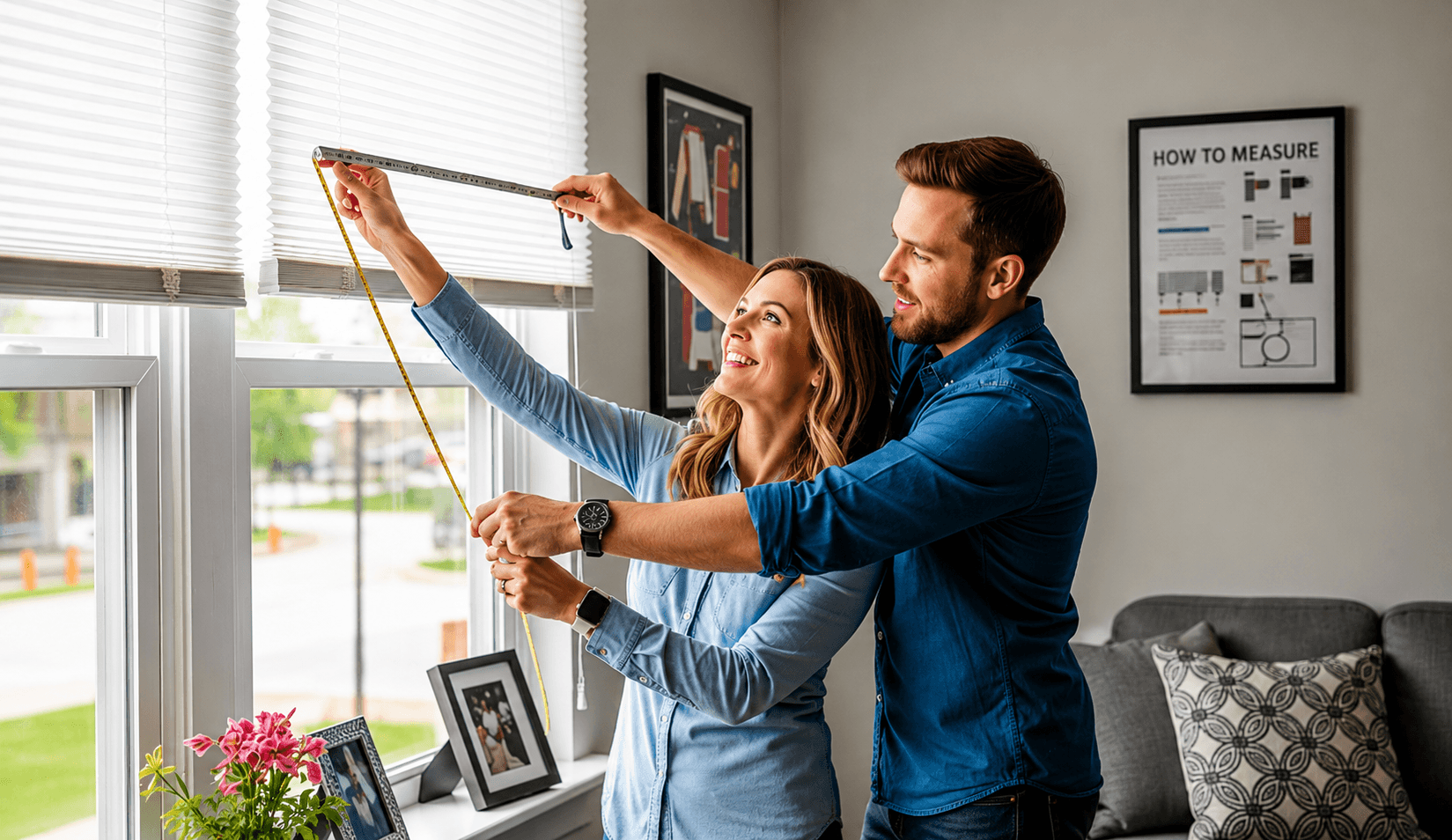
Table of Contents
- Why Accurate Measurements Matter
- Tools You Need Before You Start
- Inside Mount vs Outside Mount Blinds
- How to Measure for Inside Mount Blinds
- How to Measure for Outside Mount Blinds
- Blinds Sizing Guide by Window Type
- Common Mistakes When Measuring Window Blinds
- Tips for Custom Blinds and Shades
- FAQs
You found the perfect blinds. The color is right, the fabric is right, and the price is right. Then they arrive, and they do not fit. That single frustrating experience is something thousands of homeowners face every year, and it almost always comes down to one thing: incorrect measurements. Knowing how to measure for window shades and blinds is not complicated, but it requires precision and a clear understanding of your mounting options. Whether you are ordering custom blinds and shades online for the first time or replacing existing window coverings, this guide walks you through every step so your next order fits perfectly from day one.
Why Accurate Measurements Matter
If a blind is even a half-inch larger, it won't fit into the window frame. If it is smaller than required, it leaves out spaces through which light will come in, totally defeating the purpose of covering the windows with a blind. Apart from how they look, incorrect blinds have implications on the way light is controlled, privacy, and insulation. In the case of custom-made window blinds, incorrect measurement means having to pay for another round of production.
Making correct measurements during the process of purchasing a window blind is the most important thing.
Quick Fact: Industry data shows that measurement errors are the leading cause of blind returns among first-time buyers, accounting for over 60% of all product exchanges in the custom window treatment category.
Tools You Need Before You Start
Before you take a single measurement, gather the following:
- A steel measuring tape (fabric tapes stretch and give inaccurate readings)
- A pencil and notepad or your phone for recording measurements
- A step stool if your windows are tall
- A level, if you plan to mount outside the frame
Always measure in inches and record to the nearest one-eighth of an inch. Rounding to the nearest half inch is one of the most common errors buyers make when ordering custom blinds.
Inside Mount vs Outside Mount Blinds
This is the most important decision you will make before measuring, and it changes everything about how you take your numbers.
| Feature | Inside Mount | Outside Mount |
|---|---|---|
| Look | Clean, recessed, built-in appearance | Bolder, covers the full frame and the wall |
| Light Control | Some light gaps are possible at the edges | Full light blockage possible |
| Best For | Deep window frames, modern interiors | Shallow frames, small windows, privacy needs |
| Measurement Focus | Exact inside frame width and height | Desired coverage width and height |
The inside mount blinds are installed within the window opening and need a frame width of at least 1.5 inches to 2.5 inches. The outside mount blinds hang from the wall or window frame above the window and can be fitted to any size of the wall that you want to cover.
Understanding guides about window coverings by mount type helps you pick the right method for each room before you lift the tape measure.
How to Measure for Inside Mount Blinds
Measuring for an inside mount requires three width readings and three height readings, then using specific values from each.
Width
The width of the window frame is measured at the top, middle, and bottom. All three measurements must be noted. Choose the smallest one. Do not add anything to that. The blind manufacturer takes a few measurements into account for making a blind fit freely within the frame and deducts a little bit from them.
Height
Take measurements for the inside height of the window frame on its left, middle, and right sides. Select the highest value among these for your height to ensure that the blind will fully cover the glass panel upon closing.
Depth
It is important to ensure that the window frame has sufficient depth for the blind installation. The standard depth required for an inside mount blind is between 1.5 to 3.5 inches.
How to Measure for Outside Mount Blinds
Outside mount blinds give you more flexibility because you control the final coverage dimensions.
Width
Determine how much extra material you would like to have outside the window frame on both sides. The usual overlap is 1.5 to 3 inches on each side of the frame to prevent side lighting. This should be added to the total outside width of the window frame. If you have a 36-inch wide window frame with 2 inches of overlap on each side, your ordering width will be 40 inches.
Height
From the point at which the bracket would be mounted (usually 2 to 4 inches above the frame) up to where you want the blind to reach, take the measurement. To have coverage to the sill, you should include the sill in the measurement.
Record all measurements clearly and double-check them before placing your order for luxury window blinds online from MetBlinds to avoid costly remakes.
Blinds Sizing Guide by Window Type
Different windows require slightly different approaches to measuring:
- Standard single windows: Follow the inside or outside mount steps above. Straightforward.
- Bay windows: Measure each panel of the bay separately. Each angle section needs its own blind sized to fit that specific panel width.
- Arched or specialty windows: Measure the widest point and tallest point of the opening. Custom blinds and shades are almost always required for these shapes.
- French doors: Measure the glass panel only, not the full door. Use an inside mount where possible to avoid blinds swinging with the door.
- Skylights: Measure the inside frame only. Skylight blinds are almost always inside-mounted and require precise depth measurements for the mounting track system.
Common Mistakes When Measuring Window Blinds
This section matters. These errors are the most frequent reasons custom blind orders come back wrong, and all of them are avoidable.
1. Measuring only once
It is important to measure both width and height in three places each. This is particularly true for old buildings, where the frames may not be square, and only one measurement may miss out on the deviation.
2. Using a fabric or cloth tape
Cloth tapes tend to stretch with age and provide readings that are off by fractions of inches. Such fractions accumulate and cause either tightly-fitting or loosely-fitting blinds. It is always important to use a metal measuring tape.
3. Confusing inside and outside mount numbers
An inside mount measurement is based on the thinnest part of the measurement. While outside mount measurements take into consideration the overlap with the frame. Confusion between the two can lead to incorrect orders more often than not.
4. Forgetting the deduction
Reputable manufacturers take care to make a deduction when they manufacture the order so that the blind fits perfectly within the frame and works well. Manually doing this would result in a blind spot that is too small.
5. Not checking frame depth for inside mounts
An inside mount blind can only be ordered if you have a sufficient depth of frame, or else you are going to get a blind that does not fit right.
6. Rounding measurements
Round to the nearest one-eighth of an inch. Rounding to the nearest half inch or full inch is imprecise enough to cause fitting issues, especially for wider windows, where small errors are amplified across the full span.
Avoiding these mistakes is exactly what separates a first-order success from a costly return. If you are also evaluating which style of blind fits each room best before you measure, this overview of the full blinds collection is worth browsing to confirm your choice before you commit to dimensions.
Tips for Custom Blinds and Shades
Custom blinds are built to your exact specifications, which means your measurements carry more weight than they would for a ready-made product. A few tips to make the process smoother:
- Order samples first. Many retailers provide fabric swatches. Confirm color and texture in your actual lighting conditions before you measure and order.
- Measure after any renovations. If you are replacing trim, painting frames, or installing new flooring, complete those changes before you take your final measurements.
- Note obstructions. Handles, locks, cranks, and tilt rods inside the window frame reduce usable depth. Account for these before deciding on an inside mount.
- Take photos alongside measurements. A photo of each window with measurements noted helps avoid confusion when placing a multi-window order.
FAQs
1. How do I measure for window shades and blinds for an inside mount?
Take the inside width measurement at three locations (top, middle, and bottom), then use the narrower measurement. Take the inside height measurement at three locations and take the highest measurement. No deductions needed; your supplier will take care of that by making the fitting deduction. You have obtained window blind measurements that will fit perfectly and provide an inside-mount finish.
2. What is the difference between inside-mount and outside-mount blinds?
Inside mount blinds are mounted within the window recess and have a built-in appearance. Outside mount blinds are fitted outside the window frame and are useful when trying to block excess light and cover more wall area. The decision of which one to choose depends on your frame size and preference for style.
3. How much should outside-mount blinds overlap the window frame?
It is advisable to have a standard overlap of 1.5 to 3 inches on both sides and 2 to 4 inches above the frame. This will help eliminate side lights and make the window appear bigger.
4. Can I measure for custom blinds myself, or do I need a professional?
If you have a bay window or an arched window, you may need the services of a professional. Otherwise, the process of measuring your custom blinds can be done at home using the guide and a steel tape measure.
5. What is the most common mistake when measuring window blinds?
The most frequent error in how to measure for window shades and blinds is measuring at only one point rather than three, combined with using a fabric tape instead of steel. These two mistakes together account for the majority of sizing errors in custom blind orders.