5 Best Blackout Blinds for a Truly Dark Bedroom
Quick Answer
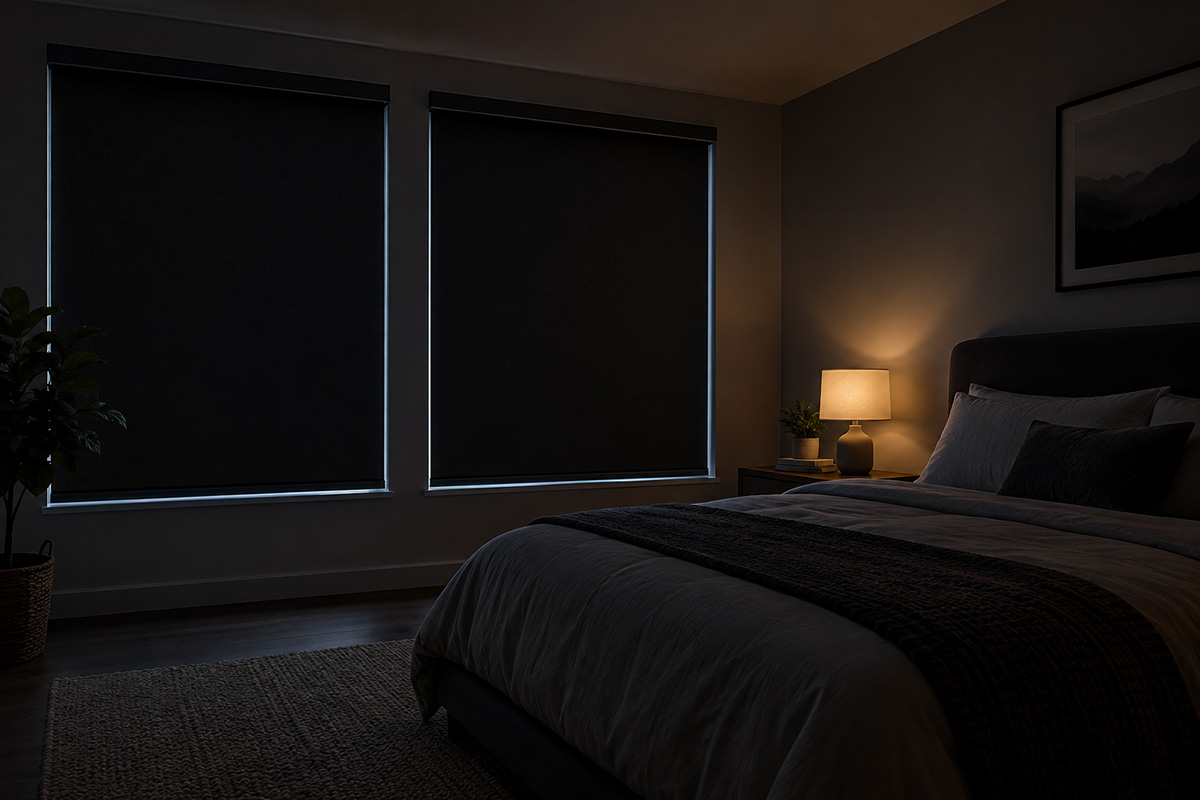
The best blackout blinds for most bedrooms are blackout roller blinds, because one solid panel blocks the most light. Choose double rollers or Honeycomb DNN blinds if you want daylight in the morning and darkness at night. Whatever you pick, pair blackout fabric with an outside mount or side channels to stop light leaking around the edges.
Ask ten people what makes a good blackout blind, and most will say the fabric. They are half right. Fabric matters, but the best blackout blinds for bedroom use pair solid fabric with a snug fit.
A roller blind with a solid, opaque panel is the obvious choice for a dark bedroom. A double roller is smarter if you want the room pitch-black at 10 p.m. but bright and airy at 8 a.m. Either way, light can sneak in through the gap between the fabric and frame, over the headrail, or under the bottom bar. You have probably seen that thin glowing outline around a blind. That outline is the enemy.
Why Blackout Blinds Matter in Calgary Bedrooms
Calgary’s long summer days make blackout blinds more than a nice extra. In late June, the sun rises before 5:30 a.m. and sets close to 10 p.m. East-facing bedrooms get bright early, and west-facing rooms stay light well past a child’s bedtime. In winter, the problem flips: early darkness means streetlights and headlights shine into street-facing rooms for most of the evening.
Three Things to Settle Before You Buy
• Fabric: Choose real blackout fabric, not one labelled "light-filtering" or "room-darkening." Those labels mean the fabric reduces light, not blocks it.
• Coverage: Measure and use the right mount to minimize edge glow.
• How you will use it: Manual, cordless, or motorized? Pick the type you will actually use every day.
Think about the room too. Blocking light for a 2 p.m. nap is a different job from blocking streetlights at midnight. If your window faces the street, you will probably want privacy as much as darkness.
5 Best Blackout Blinds for Bedrooms
We ranked these by how dark they make a room, then by flexibility, style, and ease of daily use. Every option below is custom made and fitted to your window by our installers.
1. Blackout Roller Blinds: Best Overall for Maximum Darkness
If your main goal is a dark room, start here. A blackout roller is a single piece of fabric on a roll, with no folds, slats, or seams for light to pass through. When closed, the fabric blocks light completely. Any light you see comes from the edges, which the right mount or side channels can fix.
Rollers fit most windows, minimalist rooms, and tight spaces. A quick dust or wipe keeps them looking fine.
MET Blinds makes custom roller blinds in Calgary in blackout and light-filtering fabrics, so you can choose how opaque your room is. Shift workers and light sleepers will probably like this style most.
Best for: Bedrooms, shift workers, and anyone who prefers a clean design with effective room darkening.
What to consider: Ask about side channels or an outside mount if you need near-total darkness.
2. Double Roller Blinds: Best for Day and Night Control
Can’t decide between a bright room and a dark one? You don’t have to. A double roller packs two blinds into one headrail: a blackout layer and a sheer that softens daylight while keeping some privacy.
Use the sheer in the morning and drop the blackout at night. If your bedroom gets strong east sun, this might be the smartest option on the list.
MET Blinds offers blackout rollers and sheer fabrics in the same line, plus motorized systems if you would rather not pull two blinds by hand.
Best for: Bedrooms that need flexible light control throughout the day.
What to consider: The dual-layer design requires enough space for the headrail and both fabric rolls. Check the installation dimensions before choosing this option.
3. Honeycomb DNN Blinds: Best for Insulation and Darkness
Honeycomb DNN blinds combine a blackout fabric and a light-filtering fabric in one headrail, and the two panels move independently. Use the light-filtering panel by day and the blackout panel at night, with no second blind needed.
Their air-trapping cells also insulate the window, easing summer heat and cold winter drafts. That makes them a strong fit for Calgary bedrooms, where comfort matters in every season. Performance depends on the material, cell shape, fit, and installation.
Best for: Bedrooms where insulation and light control are both important.
What to consider: Confirm the night panel is a true blackout fabric, and compare edge coverage options, since a well-insulated shade can still let in light at the sides.
4. Blackout Roman Shades: Best for a Soft, Decorative Look
Roman shades fold up neatly when you lift them. They feel warmer and less office-like than roller shades, making them a particularly good fit for transitional or layered bedrooms.
With a proper blackout lining, Roman shades cut out plenty of light. The folds add texture a plain window lacks. The catch is that folds and seams can let light leak around the edges, so how you mount them matters as much as the fabric.
MET Blinds’ Luxury Roman Shades come in blackout and light-filtering fabrics with lined options.
Best for: Bedrooms where a softer, more decorative window treatment is important.
What to consider: Confirm that the chosen shade includes blackout material or lining. Decorative fabric alone does not necessarily block light.
5. Blackout Zebra Blinds: Best for Modern Style and Adjustable Light
Zebra blinds alternate sheer and opaque bands. Offset the bands and soft light drifts in. Line up the opaque bands and the sheer gaps close.
In a bedroom, blackout fabric with properly aligned strips darkens the space nicely. But let’s be honest: it won’t match a roller. The layered bands mean a little light can still slip through in spots.
MET Blinds carries zebra blinds in blackout and light-filtering fabrics so you can compare them side by side. If you want daylight and privacy with a modern look, a zebra is a great pick.
Best for: Bedrooms where adjustable daylight and modern styling matter alongside privacy.
What to consider: If near-total darkness is your main goal, confirm the specific fabric’s blackout performance and ask how the design handles light around the edges.
How the Five Compare
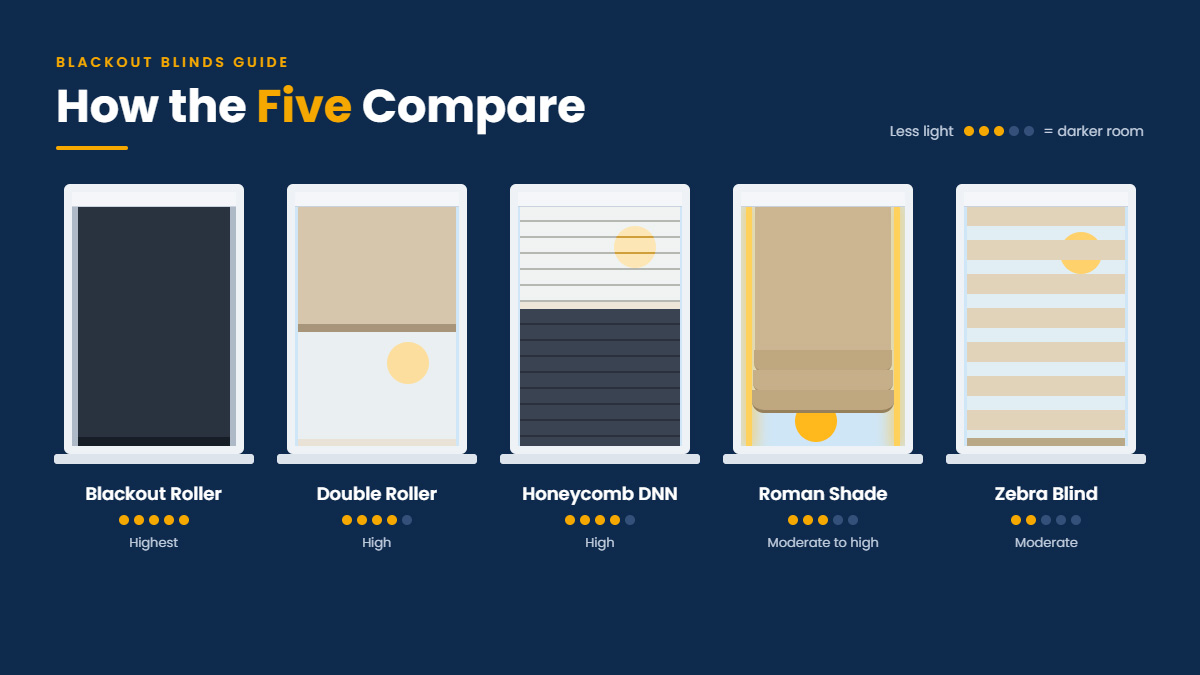
Blind | Darkness | Best for | Watch out for |
Blackout roller | Highest | Light sleepers, shift workers | Edge gaps without side channels |
Double roller | High | Day and night control | Needs more headrail space |
Honeycomb DNN | High | Insulation plus day and night use | Confirm true blackout panel |
Roman shade | Moderate to high with lining | Soft, decorative bedrooms | Leaks at folds and edges |
Zebra | Moderate | Modern style, adjustable daylight | Light between bands |
How to Choose the Best Blackout Shades for Your Bedroom
The best choice depends on your window, sleeping routine, and expectations for darkness. Check these five factors before you buy.
1. Check Fabric Opacity
Blackout fabric blocks light from passing through. Room-darkening fabric reduces light, but it may not block it all. This is critical if you sleep during the day or the room faces morning sunlight.
When shopping, make sure the fabric you choose is labelled as blackout. Don’t rely on colour alone, since dark fabrics aren’t necessarily more effective than other types.
2. Get a Professional Measure
Even the best blackout fabric cannot block light that gets around it. A professional measure checks frame depth, squareness, and the space around the hardware, so gaps are planned out before you order.
For an inside mount, check the frame depth and consider the gap you’ll have at the edges. An outside mount can extend past the frame, which keeps light out.
3. Consider Your Bedroom’s Orientation
A room facing east might get strong morning sun, while a room facing a bright street might have light pollution at night. Think about when the light becomes troublesome for you. If the early morning sun wakes you up, focus on blocking light at the sides and covering the whole window. Matching the solution to the problem saves you from paying for features you don’t need.
4. Choose a Suitable Operating System
Cordless blinds look sophisticated and have no dangling cords. Motorized blinds are convenient and work well for large windows and multiple layers. With compatible motorized systems, you can control your blinds through a remote, smartphone, or other devices connected to your smart home.
For children’s bedrooms, safety comes first. Canada’s Corded Window Coverings Regulations, in force since May 2021, set strict limits on accessible cords, and Health Canada recommends cordless or motorized options in homes with young children.
5. Match the Blind to Your Interior
The best bedroom blackout blinds come in a variety of colours, materials, and finishes. Neutral colours suit a tranquil bedroom setting, while contrasting hardware can complement a contemporary interior. However, style shouldn’t take precedence over function. First, define your blackout needs for light blocking, fit, and coverage, then choose the right material and colour.
How to Make Blackout Blinds Work Even Better
You can buy a great blind and still end up with a glowing window. Installation is where you win or lose the battle against light.
• Mount outside the frame when it works. The fabric can overlap the opening, which helps prevent leaks at the sides. Make sure your chosen style supports it.
• Add side channels. Light-blocking channels along the sides of a roller close the edge gaps that cause most light leaks.
• Check the top and bottom. Light slips in above the headrail and under the bottom bar. A cassette, fascia, or valance can cover the top.
• Get the measurements right. Sloppy measuring means gaps. A professional measurement covers the frame, the depth, and the space around the hardware.
• Test it twice. Check the window in daylight, then again after dark. Streetlights show gaps you’d never spot in the afternoon.
• Layer if you have to. Blackout blinds plus curtains cover whatever’s left and make the room feel finished. It’s handy when the frame or blind design makes full edge coverage tricky.
No single product makes a room completely dark. The result comes from the whole setup, including how well the blind fits the window.
Blackout Blinds vs. Blackout Curtains
Blinds give the cleanest fit, while curtains add softness and cover the edges well. It depends on your window, the look you want, and how much light you need to stop.
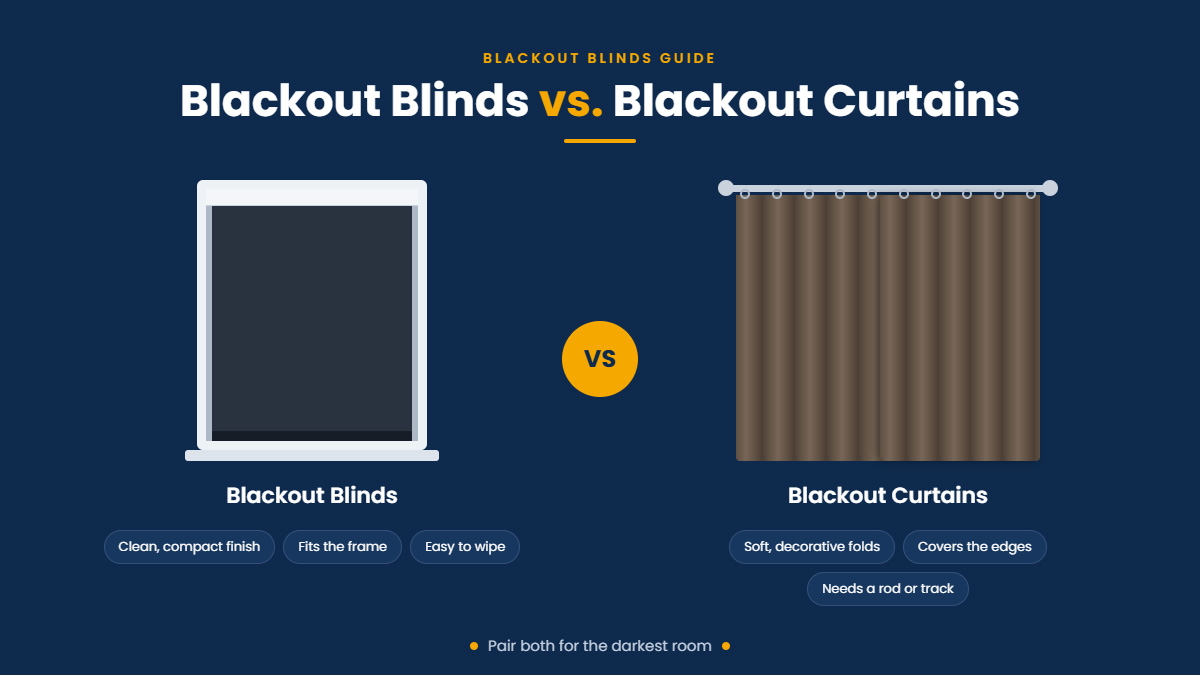
Feature | Blackout Blinds | Blackout Curtains |
Appearance | Clean, compact finish | Soft, decorative folds |
Space | Fits within or around the window frame | Needs room for the fabric and a rod or track |
Light control | Depends on the fabric and edge coverage | Depends on the fabric, width, and how much the panels overlap |
Maintenance | Often easy to dust or wipe, depending on the material | May need fabric-specific cleaning |
Layering | Can be paired with curtains | Can be paired with blinds |
Roller blinds suit a minimalist bedroom. Curtains are the better fit if you want something softer and cozier. Use both for a little decoration plus extra coverage. MET’s Dream Curtains pair a sheer and a blackout panel on one track if you want both in a single treatment.
Conclusion
The best blackout blinds for bedrooms deliver the darkness you need, fit your window, and are easy enough to use every day. For most Calgary bedrooms, blackout roller blinds are the best starting point. Choose double rollers or Honeycomb DNN blinds for day and night flexibility. Whatever you choose, protect the edges.
Book a free in-home measure, and our installers will recommend the right blackout setup for each bedroom.
Frequently Asked Questions
1. What are the best blackout blinds for bedroom windows?
Blackout roller blinds are the best choice for most bedrooms because one solid panel blocks the most light. For daytime light control, choose a double roller or Honeycomb DNN blinds. Ultimately, the decision depends on window size, fabric type, and how you install the blinds.
2. Do blackout blinds make a bedroom completely dark?
Blackout blinds get you very close to darkness. You may still see light around the sides, top, or bottom. Accurate measurements, side channels, and careful installation make a difference.
3. Are blackout shades better than room-darkening shades?
For darkness, blackout shades are better. Blackout shades stop light from passing through the material. Room-darkening shades only reduce light. If you want darkness, choose blackout.
4. Which blackout blinds are best for bedrooms facing morning sunlight?
Blackout roller blinds with proper window coverage are a good choice for rooms that get early morning sun. Double roller blinds are a suitable alternative if you want an extra sheer layer during the day. Pay close attention to edge gaps, since low morning sun shows them clearly.
5. Can I combine blackout blinds with curtains?
Yes. Blackout blinds with curtains can improve window coverage, reduce light seepage, and create a layered look. Choose compatible sizes and mounting positions so the two treatments complement each other.