Zebra Blinds vs Sheer Shades: Which Is Right for You?
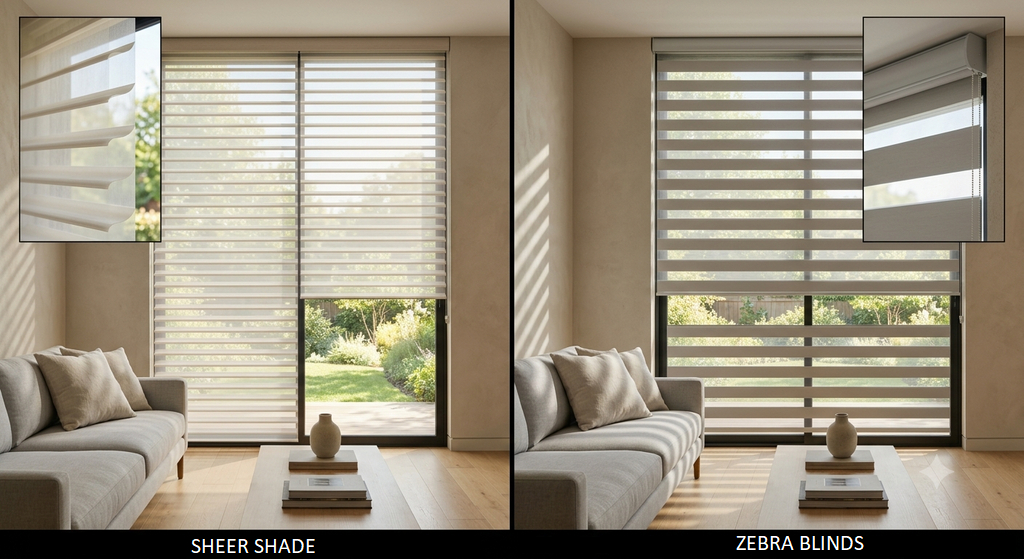
Table of Contents
How Zebra Blinds Work
How Sheer Shades Work
Difference Between Zebra Blinds and Sheer Shades
Light Control Comparison
Privacy Comparison
Appearance and Style
Which Rooms Suit Zebra Blinds?
Which Rooms Suit Sheer Shades?
Motorized Options
How to Measure for Window Shades and Blinds
FAQs
Conclusion
The selection of the right window coverings may have an impact on both the aesthetics and utility of a particular room. The choice among various styles of window coverings may include such window treatments as Zebra Blinds and sheer shades. While similar in many ways, zebra blinds and sheer shades differ in several aspects.
In case you need to select the appropriate type of window coverings for your room, then knowing the difference between zebra blinds and sheer shades may be helpful.
How Zebra Blinds Work
Zebra blinds, which are also known as zebra shades, use a single piece of material with sheer horizontal stripes alternating with opaque horizontal stripes.
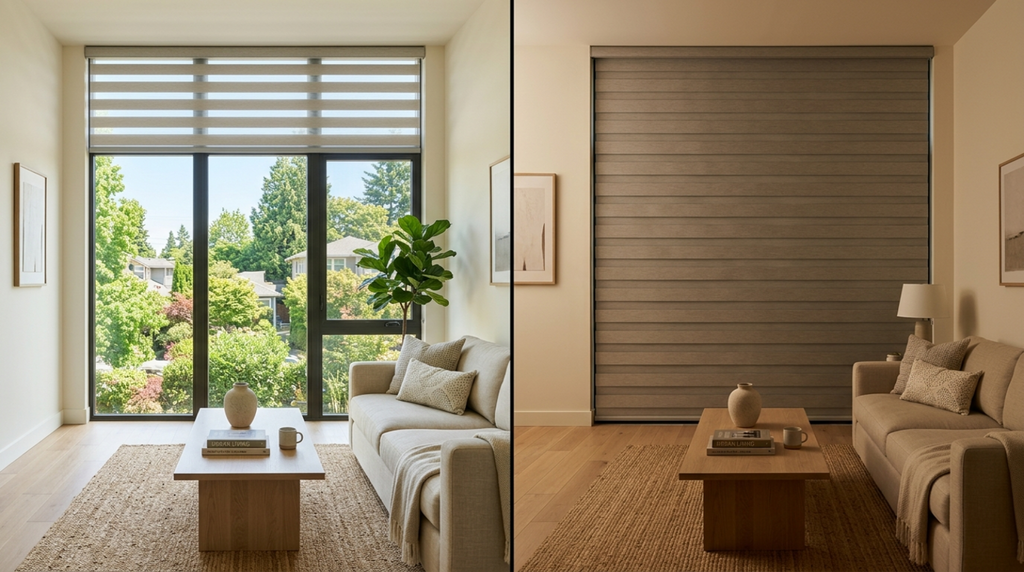
When the blind is in motion, the stripes assume a different position. This makes it possible to regulate the amount of light that comes into the room without having to open or close the blind.
There are generally three positions:
Opaque bands aligned: More light blocking and privacy
Sheer and opaque bands alternating: Soft, filtered daylight with privacy
Blind fully raised: Clearer view through the window
This layered stripe design gives Zebra Blinds their distinctive appearance while allowing flexible control throughout the day.
It offers custom Zebra Blinds with light-filtering and blackout fabric options, as well as cordless, motorized, and smart control systems.
How Sheer Shades Work
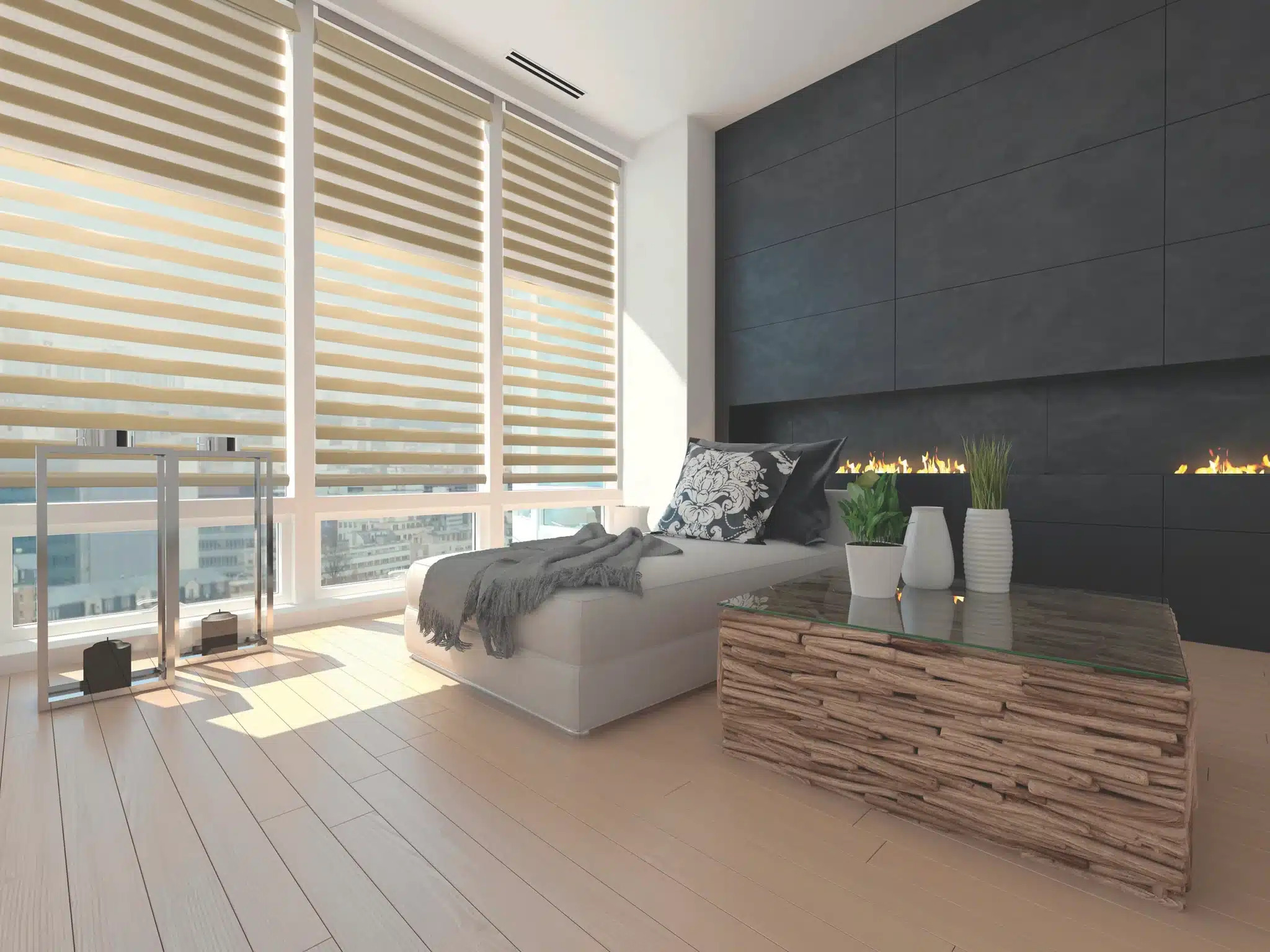
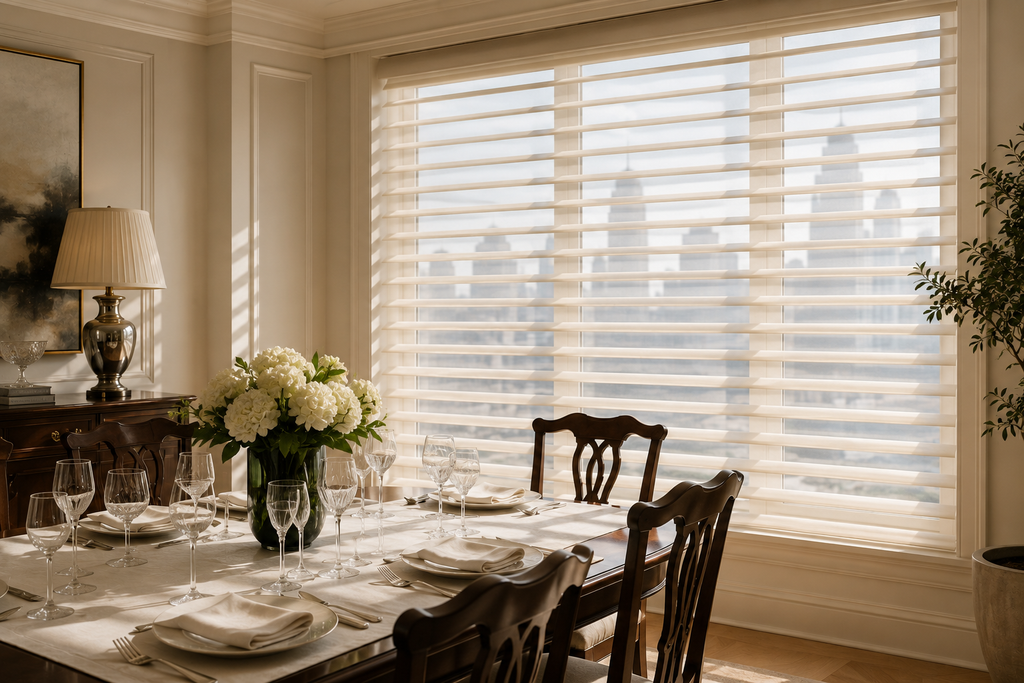
Sheer shades use a different construction. Sheer shades usually comprise two layers of sheer fabric that are linked together by fabric vanes horizontally.
While adjusting the shade, the position of these vanes changes to regulate the passage of light through the fabric.
If the vanes are placed to offer privacy, they obstruct the direct view through the window. While opening, they become flat and allow diffused sunlight into the room.
The only difference lies in the mechanism used. Zebra blinds operate on the principle of alternate placement of sheer and opaque fabrics, whereas sheer shades have rotating vanes between two layers of sheer fabric.
Difference Between Zebra Blinds and Sheer Shades
The difference between zebra blinds and sheer shades becomes clearer when you compare their construction and appearance.
Feature | Zebra Blinds | Sheer Shades |
Construction | Single layer with alternating sheer and opaque bands | Two sheer layers with horizontal vanes |
Appearance | Modern, structured, striped | Soft, layered, refined |
Light control | Adjustable from filtered light to stronger light blocking | Soft, diffused light control |
Daytime privacy | Good | Good |
Design style | Contemporary and minimalist | Traditional and transitional |
Blackout potential | Available with suitable fabrics | Typically focused on soft light diffusion |
Motorization | Available with compatible systems | Available with compatible systems |
Neither option is universally right for every home. The better fit depends on the appearance and level of light control you want.
Light Control Comparison
Light control is one of the biggest factors to consider when comparing these window treatments.
Sheer Shades
Sheer shades are designed around softer light diffusion. Their layered sheer construction can reduce harsh sunlight while allowing daylight to enter the room.
This makes them useful when your priority is maintaining a bright, softly illuminated space rather than achieving stronger light blocking.
If you prefer a more pronounced light-control effect, Zebra Blinds may offer greater flexibility with their opaque bands.
Zebra Blinds
Zebra Blinds give flexibility in light blocking due to the fact that the sheer and opaque panels can be aligned in various ways during the day.
If the opaque panels overlap each other, they are able to block the light better. If the sheer and opaque panels alternate with each other, then the sunlight can go into the room but still keep the privacy.
MET Blinds provides Zebra Blinds in fabric versions for light filtering and blackout.
Privacy Comparison
Both treatments can provide daytime privacy, but neither should automatically be treated as a complete privacy solution at night.
When interior lights are switched on after dark, sheer fabric can become more transparent from the outside. This is an important consideration for bedrooms, bathrooms, and street-facing rooms.
For stronger nighttime privacy, consider a blackout or room-darkening layer behind the main shade.
Your choice should therefore depend on when privacy matters most and whether you need complete darkness or simply daytime screening.
Appearance and Style
The visual difference between these two window treatments can be just as important as their functionality.
Zebra Blinds
Zebra blinds have a distinctive horizontal stripe pattern. The alternating bands create a structured and contemporary look that can work particularly well in modern and minimalist interiors.
They can add visual definition without requiring heavy curtain fabric around the window. If you're looking specifically for zebra blinds in Calgary, explore MET Blinds' Zebra Blinds collection.
Sheer Shades
Sheer shades have a softer appearance because of their layered fabric and horizontal vanes.
They can suit traditional, transitional, and elegant interiors where you want the window treatment to blend more gently into the room.
For formal living rooms and dining spaces, the softer fabric appearance may complement furnishings and décor particularly well.
Which Rooms Suit Zebra Blinds?
Zebra blinds can work across many areas of the home.
Living Rooms
Their adjustable bands let you shift between natural light and greater privacy throughout the day.
Home Offices
The opaque bands can help reduce glare when working near a window.
Bedrooms
Blackout fabric options can provide stronger light control when selected for the right application.
Modern Interiors
The structured horizontal design complements contemporary and minimalist décor.
MET Blinds states that its Zebra Blinds are suitable for living rooms, bedrooms, home offices, and commercial spaces.
Which Rooms Suit Sheer Shades?
Sheer shades can be particularly suitable for spaces where soft natural light is important.
They can work well in:
Dining rooms
Formal living rooms
Bedrooms
Sitting areas
Transitional interiors
Spaces where gentle light diffusion is preferred
Their layered construction creates a softer visual effect compared with the more graphic appearance of Zebra Blinds.
Motorized Options
Both Zebra Blinds and sheer shades can be paired with motorized control where compatible.
Motorization can be especially useful for large windows, multiple window coverings, or windows that are difficult to reach. Smart systems may also allow you to control shades using a remote, smartphone, voice commands, or scheduled automation.
MET Blinds offers motorized and smart-home-compatible Zebra Blinds, including app, voice, and scheduled control options.
How to Measure for Window Shades and Blinds
Accurate measurements are important when ordering custom window treatments.
Before choosing a product, measure:
Window width: Measure across the window at the required points.
Window height: Measure from the top to the bottom.
Mounting area: Determine whether you need an inside or outside mount.
Frame depth: Check whether there is enough space for the selected treatment.
Multiple windows: Measure each window individually rather than assuming they are identical.
For a more detailed walkthrough, read How to Measure for Window Shades and Blinds.
If you prefer a professionally fitted solution, custom window treatments can also eliminate much of the guesswork involved in measuring and installation.
Conclusion
When comparing Zebra Blinds vs Sheer Shades, start with how you want your room to look and how you want daylight to behave.
Zebra blinds use alternating sheer and opaque bands to provide adjustable light control with a modern, structured appearance. Sheer shades use layered sheer fabrics and rotating vanes to create softer, more diffused daylight.
Consider your room's design, privacy requirements, desired light control, window size, and operating preferences before choosing.
FAQs
What is the difference between zebra blinds and sheer shades?
Zebra blinds use alternating sheer and opaque fabric bands that shift to control light. Sheer shades use two layers of sheer fabric with horizontal vanes that rotate to adjust light and privacy.
Are zebra blinds better than sheer shades?
Neither option is universally better. Zebra blinds offer a more structured appearance and flexible light control, while sheer shades provide softer light diffusion and a more layered appearance.
Are Zebra Blinds good for Calgary homes?
Yes. Zebra blinds can be used in different rooms and are available in custom sizes, light-filtering and blackout fabrics, and motorized options through MET Blinds.
Can I shop Zebra Blinds online?
Yes. You can shop Zebra Blinds online, select suitable fabric and control options, and arrange professional installation through MET Blinds.
Can Zebra Blinds provide complete privacy?
They can provide strong daytime privacy depending on their position and fabric, but sheer fabric elements can become less private at night when interior lights are on. A blackout or room-darkening layer may be more appropriate when complete nighttime privacy is required.
Can Zebra Blinds be motorized?
Yes. MET Blinds offers Zebra Blinds with motorized and smart control options, including remote, smartphone, voice, and scheduled automation.