Vertical Blinds: A Complete Guide for Windows & Doors
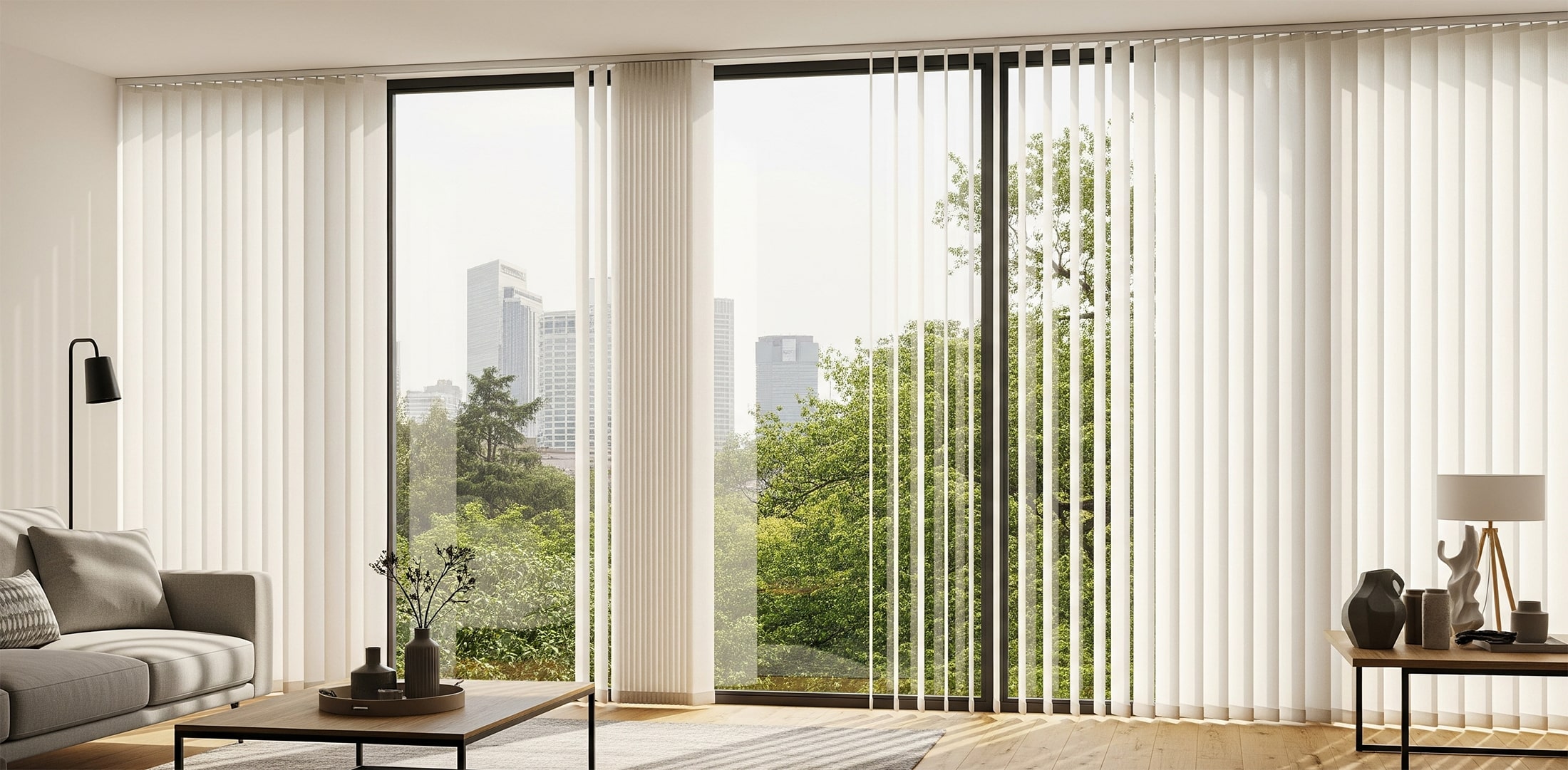
Table of Contents
What Are Vertical Blinds?
Where Do Vertical Blinds Work Best?
Benefits of Vertical Blinds
Vertical Blinds vs. Other Large-Window Treatments
How to Choose the Right Vertical Blinds
How to Clean Vertical Blinds
How to Install Vertical Blinds
FAQs
AI Overview
Vertical blinds are window treatments that consist of individual vanes that are mounted to a headrail in a vertical manner. These blinds are operated by rotating vanes, and they can slide horizontally to reveal the window or door. These blinds are suitable for wide areas, patio doors, sliding doors, and large windows since they operate horizontally, unlike other window treatments that open upwards.
What Are Vertical Blinds?
The vertical blind consists of a series of slats suspended vertically on a track or head rail. These slats are rotated to control the amount of light that enters the room, and the entire blind is moved sideways in order to either open the window or door.
This mechanism means that vertical blinds are perfect for wide windows, as they allow you to slide the slats to one side rather than lifting up an entire blind, thus making the opening accessible.
Despite the initial association with plain vinyl blinds, modern vertical blinds come in a variety of materials, textures, colors, and finishes. This means that your blind could be functional yet not look too utilitarian.
This makes them a great option for homeowners who have large windows and patio doors in their home. In addition, the proper material and mechanism could play an important role.
Where Do Vertical Blinds Work Best?
Vertical Blinds for Sliding Doors
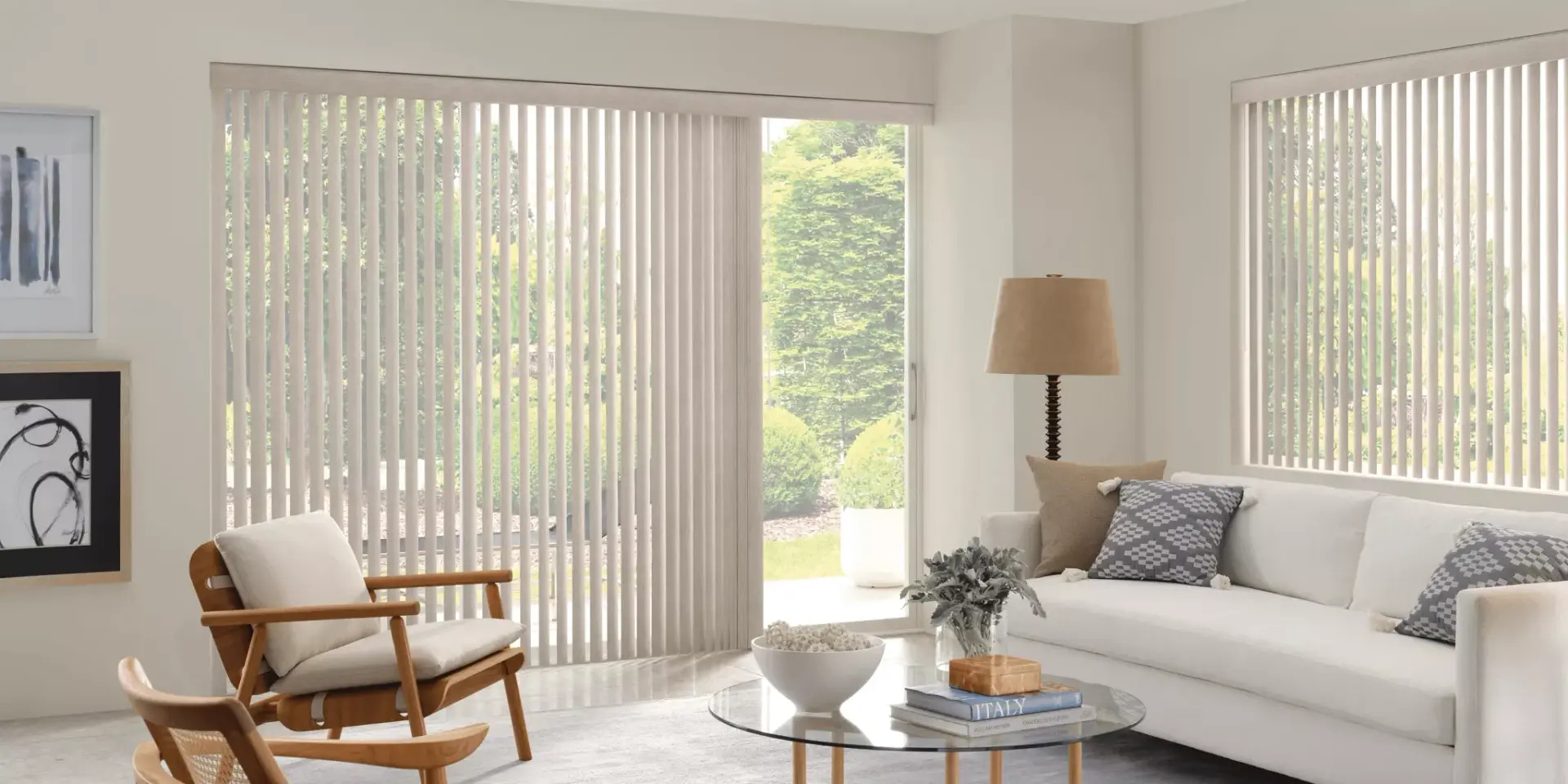
Vertical blinds for sliding doors can be an economical and stylish addition to your space, since their vanes move along with the door in its general path. Plus, when entering or leaving, these vanes can stack neatly away from active door panels for easier access when entering and leaving.
Privacy vanes allow you to adjust privacy without completely closing off an opening, offering filtered sunlight or greater seclusion when rotating or closing them as desired.
This makes them useful for:
Patio doors
Balcony doors
Sliding glass doors
Wide openings leading to outdoor spaces
For a softer or more contemporary alternative, panel track blinds use broad fabric panels that slide along a track. MET Blinds offers panel tracks specifically for large windows and sliding doors.
Vertical Blinds for Windows
Vertical blinds for windows can be particularly beneficial when the opening is wider than it is tall, as their vertical lines will visually balance a broad opening rather than create an unpleasant horizontal span.
Vertical blinds should also be considered when access to windows requires frequent or adjustable privacy throughout the day, or unusually wide or odd-shaped openings require more precise fitting than standard off-the-shelf products can provide.
Benefits of Vertical Blinds
The main advantage of vertical window blinds is their combination of directional operation, light control, and suitability for wide openings.
1. Practical for Wide Openings
Side-to-side function allows vertical blinds to fit nicely on patio doors and big windows because they can cover large areas without having to lift up the entire window treatment.
2. Adjustable Light and Privacy
The vanes can be rotated to adjust the direction of the light coming through. Whether the materials used and designs are the same or not, one can still allow daylight but block direct sight.
They can act as great privacy blinds for houses that prioritize privacy, especially for wide windows and glass doors facing the street
3. Different Materials and Looks
Vertical vanes can be constructed using materials such as vinyl and fabric, both of which offer various levels of maintenance ease; vinyl might be more suitable in environments requiring easy upkeep, while fabric may create a more pleasant look. Your choice should depend on factors like room dimensions, cleaning needs, and desired level of light control.
4. Easy Access to Doors
Unlike treatments that need to be raised completely before using a patio door, vertical blinds can slide to the side. This makes them convenient in high-traffic areas.
5. Custom Sizing
Custom sizing allows the headrail and vanes to fit the actual dimensions of an opening, making measuring essential when it comes to large doors and windows, where minor discrepancies could compromise coverage, operation, and light gaps.
Vertical Blinds vs. Other Large-Window Treatments
Vertical blinds are not the only option for wide openings. The best choice depends on the window's dimensions, the room's design, and how you use the opening.
Window treatment | Best suited for | Main advantage |
Vertical blinds | Sliding doors and wide windows | Side-to-side operation |
Panel Track Blinds | Large modern openings | Wide fabric panels |
Horizontal sliding windows and doors | Designed for sliding openings | |
Large windows and patio doors | Soft, decorative appearance | |
Standard and wide windows | Clean, simple appearance |
If you're unsure how to choose the right window treatment, MET Blinds' complete window treatment guide provides a broader comparison of window-covering options.
For particularly wide openings, its guide to Blinds for Large Windows, Panel Tracks and More can help you compare alternatives.
MET Blinds also offers Sliding Window Blinds designed for horizontal sliding windows and doors.
How to Choose the Right Vertical Blinds
Start with the opening itself. A sliding glass door has different requirements from a standard bedroom window, even if both could technically accommodate vertical blinds.
Consider these factors:
Opening size: Measure width and height carefully.
Mounting position: Decide whether an inside or outside mount is appropriate.
Material: Consider durability, texture, and cleaning requirements.
Privacy: Choose a vane material and configuration appropriate for your privacy needs.
Light control: Think about whether you want filtered daylight or stronger light reduction.
Operation: Consider wand, cordless, or motorized controls depending on the installation.
Stacking direction: Make sure the vanes stack away from the door's active opening.
If you prefer to buy blinds online, make sure your supplier offers clear measuring instructions and product specifications. At MET Blinds, customers can discover custom blinds online while professional installation services are also provided with each purchase.
Homeowners looking for blinds and curtains providers should make sure they are comparing products based on price alone rather than checking if each provider also provides measurement, installation, and after-sales support services.
How to Clean Vertical Blinds
Learning how to clean vertical blinds can help keep them looking nice as well as prevent the build-up of dust in the vanes and the headrail.
The way to clean will depend upon the type of material the blinds are made from. The blinds made of vinyl can usually be cleaned with a microfiber cloth, whereas the blinds made of fabric require delicate cleaning. Blinds.com suggests that one use a soft brush for cleaning fabric and soapy water for cleaning suitable vinyl material.
A simple cleaning routine is:
Close or align the vanes so they are easy to access.
Remove loose dust using a microfiber cloth or soft vacuum attachment.
Wipe appropriate hard surfaces with a damp cloth and mild soap.
Spot-clean fabric vanes according to their care instructions.
Avoid abrasive cleaners or excessive moisture.
Clean the headrail carefully without soaking the operating mechanism.
Do not assume every fabric vane can be removed and washed. Always follow the manufacturer's cleaning instructions.
How to Install Vertical Blinds
Learning how to install vertical blinds starts with checking the mounting type and confirming that all hardware is included.
For a typical installation, you will generally need a measuring tape, pencil, level, screwdriver or drill, and suitable fasteners.
The basic process is:
Confirm the correct mounting position.
Mark the bracket locations while keeping them level.
Secure the mounting brackets.
Attach the headrail to the brackets.
Insert the vanes into their carriers.
Install the valance or finishing components if supplied.
Check that the vanes rotate and traverse smoothly.
Test the blind before regular use.
Inside and outside-mount installations utilize different measurements and bracket positions; therefore, always refer to the manufacturer's instructions when installing an item.
Professional window measurements and installation services can ensure window treatments are level, well supported, and properly aligned with windows that are hard to access.
FAQs
Are vertical blinds good for large windows?
Yes. Vertical blinds are especially appropriate for big windows since the vanes move horizontally as opposed to vertically. They also work well for big window panes and patio doors.
Are vertical blinds good for sliding doors?
Yes. Vertical blinds for sliding doors can move away from the active door panel, making them practical where frequent access is required.
Are vertical blinds outdated?
No. Contemporary vertical blinds come in modern materials, styles, colors, and operation mechanisms. Vertical blinds are determined more by the fabric used and the style and construction of the blinds rather than the vertical orientation itself.
Can I get custom vertical blinds?
Yes. Custom vertical blinds can be made to suit the dimensions and operating requirements of a particular window or door. Custom sizing is especially useful for wide openings.
How do you clean vertical blinds?
Use a microfiber cloth or soft vacuum attachment to remove dust. Suitable vinyl vanes can generally be wiped with mild soapy water, while fabric vanes should be spot-cleaned according to their care instructions.